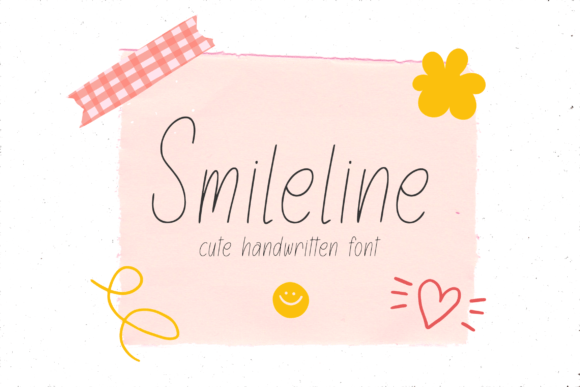
Smileline: A Handwritten Font for Branding with Personality
I was working on a branding project for a small bakery, and I needed a font that felt warm, approachable, and just a little bit whimsical. That’s when I stumbled upon Smileline—a handwritten font from Script Amp that immediately caught my eye. It wasn’t just the cute, cursive style that made me pause; it was the way it seemed to carry a story in every stroke. I decided to test it across different brand elements, from logo drafts to social media layouts, and here’s what I found.
What Makes Smileline Stand Out
Smileline is a handwritten font that feels like a personal note scribbled in a journal. Its soft curves and gentle loops give it a friendly, conversational tone. It has a light, airy feel that works well for brands aiming to appear approachable, creative, or community-driven. The font isn’t overly ornate, which means it stays readable even at smaller sizes—though it shines brightest as a display or headline font.
One of its most appealing traits is how it balances playfulness with professionalism. It doesn’t scream “childish” or “unreliable,” which is a common pitfall with some script fonts. Instead, it feels like a signature you’d sign on a thank-you card or a label on a handmade product. This makes it ideal for boutique shops, artisanal brands, and lifestyle businesses that want to communicate warmth without sacrificing credibility.
Testing Smileline in Real Projects
I used Smileline in a few key areas during the bakery project. For the logo, I paired it with a clean sans-serif font for the body text. The contrast helped the name stand out while keeping the overall design modern and legible. On packaging mockups, Smileline worked beautifully on labels and tags, giving them a personal touch that felt handcrafted.
On the website header, I placed Smileline above a hero image of fresh pastries. It added a sense of charm that aligned perfectly with the brand’s identity. For social media posts, I experimented with using Smileline in captions and call-to-action buttons. The font’s character helped draw attention to key messages, especially when used sparingly.
However, I did notice that Smileline can be too delicate for long blocks of text. Using it for body copy on the website would have been challenging, as the small details could become hard to read on mobile devices. I recommend reserving it for headlines, taglines, or short phrases where its visual impact can shine without overwhelming the reader.
Font Pairing and Practical Considerations
When pairing Smileline with other fonts, I found that a simple sans-serif like Montserrat or Roboto provided a great balance. The contrast between the handwritten script and the clean lines of the sans-serif kept the design from feeling cluttered. For more decorative projects, I tested it alongside a serif font like Playfair Display, which gave the overall look a more sophisticated edge.
It’s also worth noting that Smileline includes a range of alternates and ligatures, which can add subtle variation to your designs. These features are especially useful for creating unique logos or custom illustrations that feel more personalized.
If you’re planning to use Smileline in client work, make sure to check the commercial licensing terms. Since it’s a premium font from Script Amp, it’s important to ensure you have the right to use it in brand identities, packaging, websites, or print-on-demand products. Always review the license agreement before finalizing any design that will be used commercially.
When Smileline Works Best
Smileline excels in environments where personality and charm are key. Think about product packaging for handmade soaps, wedding invitations, editorial designs for lifestyle magazines, or branding for creative studios. It’s also a great fit for social media graphics, Instagram stories, and email headers that need to grab attention quickly.
That said, it may not be the best choice for formal corporate branding, legal documents, or any project that requires strict readability standards. If your brand needs to convey authority or precision, a more structured typeface might be a better fit. Smileline is more of an accent or supporting typeface than a primary one.
In conclusion, Smileline is a versatile and expressive font that adds a personal touch to any design. Whether you're working on a boutique brand, a wedding theme, or a magazine layout, it can help bring your visuals to life with a warm, handwritten feel. Just remember to use it wisely, pair it thoughtfully, and always respect the licensing terms. With the right approach, Smileline can be a powerful tool in your typography toolkit.