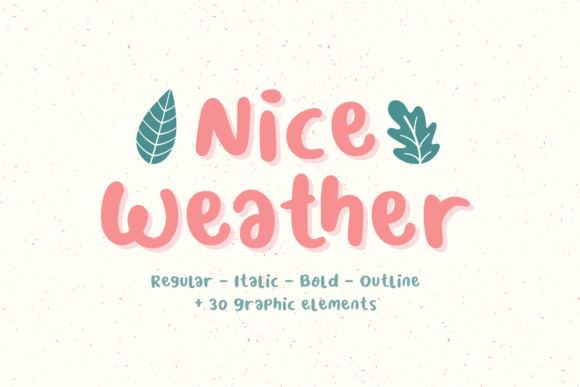
Nice Weather Font for Web Design and Branding
Nice Weather is a handwritten, paint-brushed font that brings a sense of warmth and creativity to any digital project. As a web designer, I often look for typefaces that not only catch the eye but also support readability and brand personality. Nice Weather fits this need perfectly, offering a unique blend of charm and usability.
Visual Characteristics and Style
This script font has a soft, organic feel with subtle variations in stroke width and texture, making it ideal for adding a personal touch to digital content. Its handwritten style gives it a natural, approachable vibe that can enhance user engagement and emotional connection with the brand.
The visual appeal of Nice Weather lies in its ability to stand out without being overwhelming. It works well as a display font for headlines, banners, and other prominent elements where a more traditional sans serif or serif might feel too formal or cold.
Applications in Web Design
Nice Weather can be used across various parts of a website to create visual interest and reinforce brand identity. Here are some practical applications:
- Hero Sections: Use Nice Weather for headline text in hero sections to draw attention and set the tone for the page.
- Landing Pages: Apply it to call-to-action buttons or section headings to make them more inviting and visually appealing.
- Online Store Banners: Incorporate it into promotional banners or product titles to add a creative flair that matches the brand's personality.
- Blog Headers: Pair it with a clean sans serif font for body copy to maintain readability while adding character to post titles.
- Portfolio Sites: Use it for project titles or client names to showcase a more artistic and personalized design approach.
Readability and Visual Hierarchy
While Nice Weather is a decorative script font, it still maintains enough clarity to be legible in most contexts. However, it's best suited for short phrases rather than long blocks of text. This makes it an excellent choice for headers, subheadings, and buttons where brevity is key.
When designing for mobile screens, ensure that the font size is large enough to remain readable on smaller devices. Testing on different screen sizes and backgrounds is essential to maintain visual hierarchy and avoid any issues with contrast or legibility.
Brand Tone and User Engagement
The choice of font significantly impacts how users perceive a brand. Nice Weather conveys a friendly, creative, and approachable tone—ideal for brands that want to appear warm and relatable. It adds a human element to digital experiences, which can increase trust and engagement.
For instance, a boutique online store using Nice Weather in its branding can create a more personal shopping experience. Similarly, a coaching website could use this font to communicate a supportive and encouraging message to visitors.
Font Pairing and Typography Best Practices
Pairing Nice Weather with complementary fonts can help achieve a balanced and professional look. A common strategy is to use a simple sans serif font like Helvetica or Arial for body copy, allowing the decorative script to stand out without competing for attention.
For editorial designs or blog layouts, pairing Nice Weather with a serif font such as Georgia or Times New Roman can create a more refined and elegant appearance. Always consider the overall layout rhythm and ensure that the chosen fonts work together harmoniously.
Commercial Licensing and File Formats
As a designer working on client projects, commercial font licensing is a crucial consideration. Ensure that Nice Weather comes with the appropriate license for websites, landing pages, online stores, and digital templates. Check the file formats available, including webfont compatibility, to ensure seamless integration across platforms.
Support for multiple languages and character sets is also important, especially if your website targets a global audience. Confirm that the font includes all necessary alternates, weights, and styles to meet your design needs.
Practical Examples and Use Cases
Here are a few examples of how Nice Weather can be applied in real-world scenarios:
- Creative Portfolio: Use Nice Weather for project titles and client names to add a personal and artistic touch.
- Boutique Online Store: Incorporate it into product titles and promotional banners to reflect a unique brand identity.
- Coaching Website: Apply it to headline text in blog posts or course descriptions to create a warm and engaging atmosphere.
- Product Landing Page: Use it for feature headings and call-to-action buttons to highlight key selling points.
- Digital Brand Kit: Include Nice Weather in your brand assets to maintain consistency across all marketing materials.
By thoughtfully integrating Nice Weather into your design system, you can elevate the visual appeal of your digital projects while reinforcing your brand's unique voice and personality.